EPR & Stretch Film in the U.S.: Understanding Producer Responsibility
Insights
Reading time: 3 minutes
“Who is actually responsible under EPR?”
The answer isn’t always straightforward. It depends on factors like state, packaging type, and how products move through the supply chain. The specifics can get complex, but understanding a few key concepts can help cut through the confusion and point you in the right direction.
“Who is actually responsible under EPR?”
The answer isn’t always straightforward. It depends on factors like state, packaging type, and how products move through the supply chain. The specifics can get complex, but understanding a few key concepts can help cut through the confusion and point you in the right direction.

In our recent blog, EPR & Stretch Film: What You Need to Know, we covered the basics of Extended Producer Responsibility (EPR) and why stretch film is getting more attention as EPR programs roll out across the U.S..
One question seems to come up the most:
“Who is actually responsible under EPR?”
The answer isn’t always straightforward. It depends on factors like state, packaging type, and how products move through the supply chain. The specifics can get complex, but understanding a few key concepts can help cut through the confusion and point you in the right direction.
It starts with one important EPR term: producer.
What does “producer” mean under EPR?
In the context of U.S. packaging regulations, a producer is the entity legally responsible for complying with packaging-related requirements in each state. While EPR frameworks vary by state, many programs rely on a tiered definition of producer that assigns compliance responsibility in a prescribed order.
Depending on the state, this may be:
- The brand owner whose name appears on the packaging
- A licensee authorized to use the brand on the packaging
- The importer of record
- The manufacturer or supplier placing the packaging on the market
Throughout this blog and for clarity we use producer to refer to the obligated party under state law, which is often the brand owner, subject to state-specific definitions and exceptions.
Is the producer always the brand owner?
Not always. But under many EPR programs, the brand owner is the first place to start.
Why? Because the brand owner usually controls the product being sold and the packaging used to sell it. In many situations, the company whose name appears on the package is also responsible for reporting packaging data and paying applicable EPR fees.
As a rule of thumb, the brand on the package can be a good compass when determining responsibility.
Who is considered a brand owner?
Brand owners come in many forms:
- Food and beverage companies
- Consumer packaged goods manufacturers
- Household product brands
- Industrial product brands (like stretch film)
If a company sells products under its own name, it is often considered the brand owner.
What about private-label products?
The same general idea applies.
Even if a company does not manufacture the product, it could still be the brand owner if the product is sold under its brand. In these cases, responsibility often follows the brand name on the package rather than the company that made the product.
Can a manufacturer be the brand owner?
Yes. Sometimes a manufacturer both produces and sells products under its own brand. In these instances, the manufacturer might also be the brand owner.
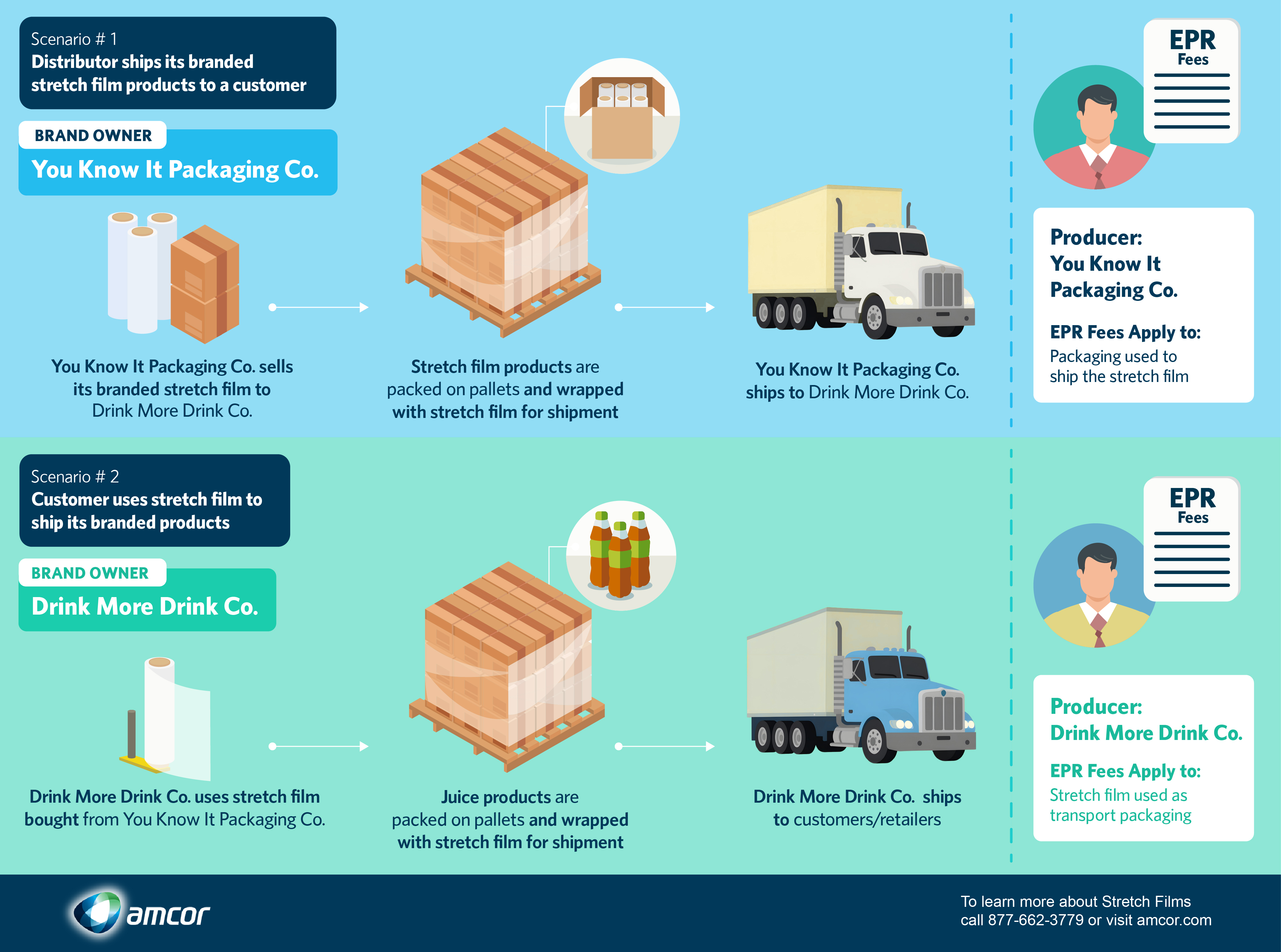
Where do stretch film distributors fit in?
This is where it can get confusing.
Most stretch film distributors are selling packaging materials, not packaged consumer products. In other words, they are supplying packaging that another company uses to package and sell its own products.
In many EPR programs, responsibility follows the company selling the packaged product—not the company supplying the stretch film. But again, this can vary by state and circumstance.
Download PDF
What role do packaging suppliers play?
Even when they aren’t considered the producer, packaging suppliers can help customers by offering insight into their packaging materials and opportunities for source reduction. That can include providing packaging data, supporting reporting efforts, and exploring downgauging and optimization strategies.
In an upcoming blog we will discuss how reducing packaging weight can be one of the most effective ways to manage EPR impact.
Key questions to consider now and in the future:
-
Whose name is on the package?
That company is often the brand owner. -
Who is selling the final packaged product?
Responsibility often follows the company bringing the packaged product to market. -
Does the brand owner have a legal presence where products are sold?
Some EPR programs include fallback provisions that may shift responsibility to another party. -
Is the company selling products or supplying packaging materials?
Packaging suppliers are often treated differently than companies selling packaged products.
Because EPR programs continue to evolve and the details can vary by program and location, it’s important to understand your specific situation. The Circular Action Alliance is a great resource to start with.
Why does this matter for stretch film?
Understanding producer responsibility helps companies:
- Navigate reporting requirements
- Assess packaging use
- Approach EPR conversations with confidence
- Explore opportunities for source reduction
Because stretch film is used in such high volumes, even small changes can have a larger impact over time.
How can Amcor help?
EPR can feel overwhelming, but you don’t have to navigate it alone.
Amcor works with distributors and end users to help:
- Better understand packaging materials and usage
- Access packaging weight and material data
- Evaluate how packaging choices may influence costs
- Identify source reduction and lightweighting opportunities
- Explore stretch film optimization and downgauging strategies
As the EPR landscape continues to change, our team can help connect the dots between changing regulations and making informed everyday packaging decisions.
Conclusion
When it comes to EPR, producer responsibility isn’t always easy to pinpoint. But understanding the general framework can help point you in the right direction. Regardless of where responsibility falls, there are opportunities to better understand your packaging, reduce material usage, and prepare for what’s ahead.
Questions about producer responsibility, stretch film, or packaging optimization? Contact Amcor to learn more.
Related Insights
EPR & Stretch Film in the U.S.: What you need to know
Stretch film plays a critical — but often overlooked — role in EPR, where packaging weight and volume directly impact reporting requirements and fees. Even lightweight film adds up quickly across high-volume use, making smart material choices and efficient application key to managing EPR costs.
Stretch film plays a critical — but often overlooked — role in EPR, where packaging weight and volume directly impact reporting requirements and fees. Even lightweight film adds up quickly across high-volume use, making smart material choices and efficient application key to managing EPR costs.