Which US states have packaging EPR laws?
Insights
Reading time: 3 minutes
As businesses work to get familiarized with Extended Producer Responsibility laws (EPR), the landscape continues to evolve.
Today, EPR laws are implemented on a state-by-state basis and at their own pace, which makes it difficult for businesses that operate across regional markets to keep up.
While producers are still trying to understand what EPR is and how it’s going to impact their packaging, timelines for programs are progressing, deadlines are approaching, and confusion is growing.
- Which states have EPR laws?
- Which states have already begun collecting fees?
- What are the next important dates I need to know?
These are just a few of the state-specific EPR questions we’re hearing from our customers. In this article, we will do our best to address these questions and more as we continue in our effort to provide clarity to a complicated topic.
Which states have EPR laws?

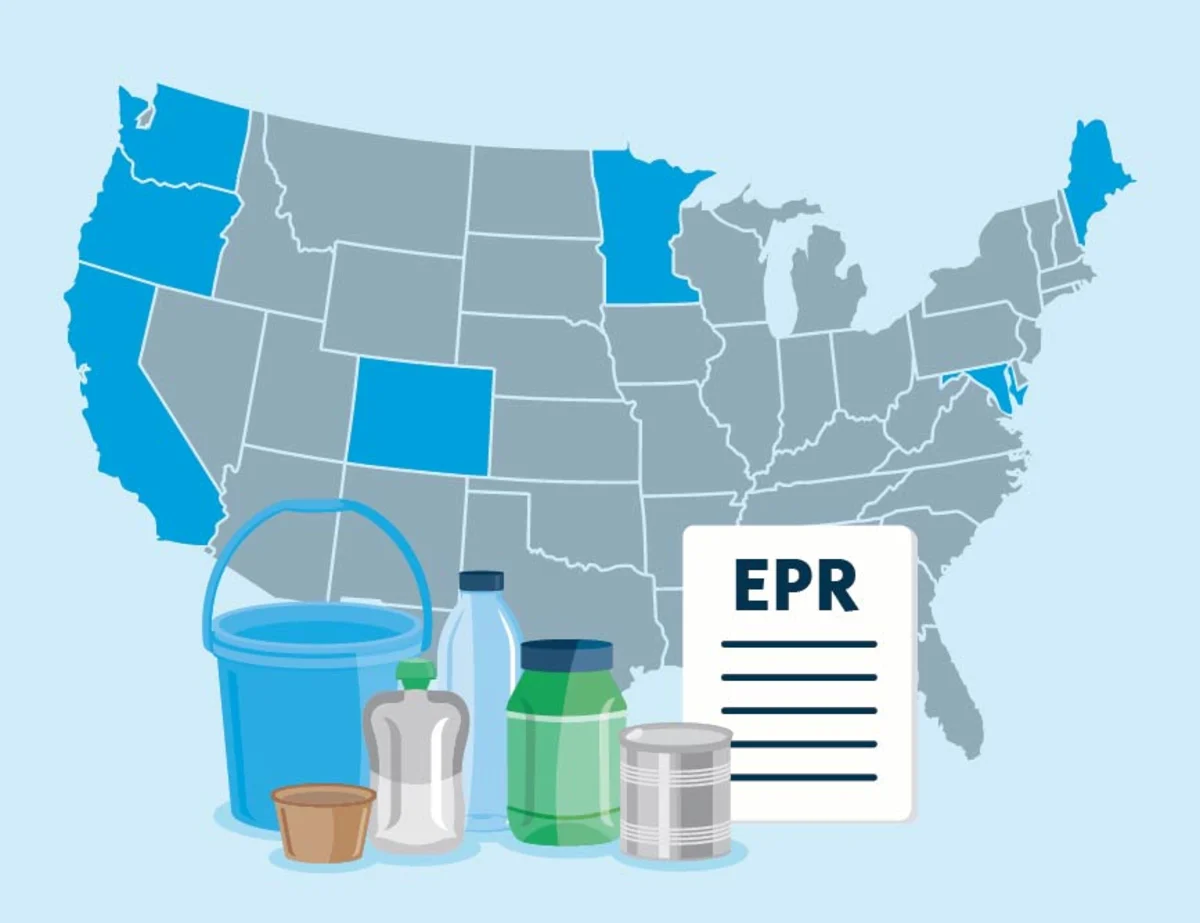
Packaging EPR has passed in 7 states, with 2 new states passing in 2025:
- California
- Colorado
- Maine
- Maryland
- Minnesota
- Oregon
- Washington
Many states are discussing EPR or conducting needs assessments, and there are 5 states we are watching closely with a high probability of passing EPR in 2026:
- Massachusetts
- New Jersey
- New York
- Rhode Island
- Virginia
What is a needs assessment?
The Circular Action Alliance (CAA) defines a needs assessment as an in-depth study of a jurisdiction’s existing recycling services and infrastructure for managing single-use packaging and paper products.
The primary purpose is to understand the performance and costs of the current system and define the activities and investment needed to meet the requirements of an EPR law.
Completion of a Needs Assessment may or may not be required to be completed prior to the rollout of an EPR program.
What is the difference between passed legislation and implemented legislation?
Once legislation is passed, it then has to be implemented. The implementation process varies by state as does the timeline to implement. For example, some states may issue a needs assessment prior to passing legislation, while others may do it once legislation is passed.
Which states have already begun collecting fees?
Currently, Oregon's EPR program has begun and producers have been required to pay fees. Fees for producers in Oregon were invoiced on July 1, 2025.
Colorado has the 2026 Due Schedule posted, and the first scheduled invoice date was January 1, 2026.
What are the next important dates I need to know?
There are several program updates in 2026, but the most relevant producer dates center around reporting due dates and fee invoicing.
Below, we’ve captured the high-level reporting and invoicing dates as released by the CAA and simplified them into chronological order.
How do I stay up to date with state EPR laws?
There are a few quick and easy ways to stay up to date with state EPR news.
- Register with the Circular Action Alliance (CAA). The CAA is a Producer Responsibility Organization (PRO) that helps producers comply with US EPR laws. Once registered, you will be on the CAA mailing list to receive the latest news, resources, and communications.
- Visit sites like Packaging Dive that compile and distribute EPR news and updates, your industry trade associations, or the Sustainable Packaging Coalition that shares helpful resources and policy roundups.
- Stay connected with your packaging supplier(s).
Conclusion
If one thing is clear, it's that this is just the tip of the iceberg for EPR programs. We anticipate there to be a lot of state level activity in 2026, which means there will be plenty of updates to keep tabs on. It will seem complicated and messy to start, but with the right resources and support, your business can be well positioned for success in the “EPR era”.
Not sure where to start? That’s okay. We have a team of packaging consultants ready to provide you with expert advice and recommendations tailored to your business. Get in touch or visit Amcor's sustainability home to learn more about our commitment to sustainable packaging solutions.