Redesigning Packaging for PPWR: A Guide for Consumer Health Brands
Insights
Reading time: 3 minutes
Learn how to redesign consumer health packaging for PPWR. Practical guidance on recyclability, PCR content and material optimization for EU markets.
Learn how to redesign consumer health packaging for PPWR. Practical guidance on recyclability, PCR content and material optimization for EU markets.
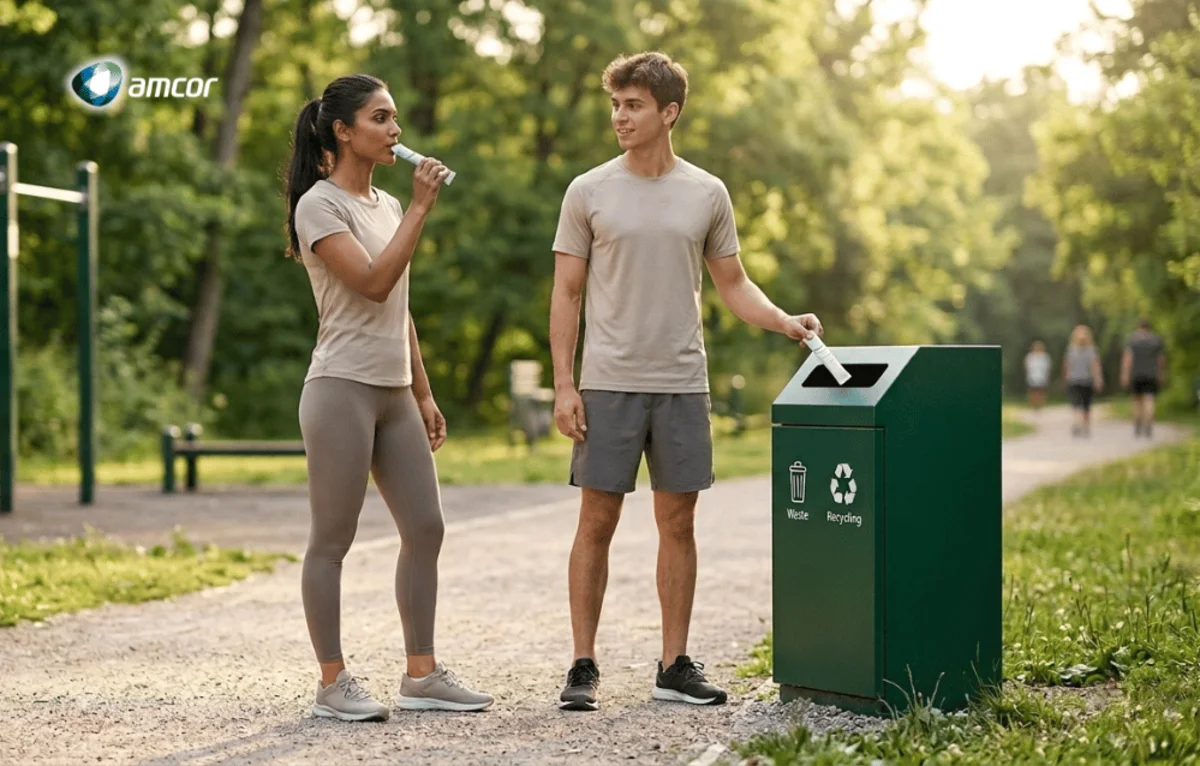
Your packaging roadmap
The Packaging and Packaging Waste Regulation (PPWR) is reshaping packaging across the EU, including for consumer health brands. With recyclability requirements, harmonized Design for Recycling criteria and stricter rules rolling out starting from 2026, decisions you make now will determine whether your packaging stays compliant, cost-efficient and market-ready over the next decade.
The good news: with a structured process, you can meet PPWR requirements while maintaining product protection and cost efficiency.
Below are four practical steps you can take now.
1. Start Redesigning Your Packaging Now
As the PPWR advances, nutraceutical and consumer health packaging, considered within the scope of food packaging under the regulation, faces a clear and evolving set of requirements.
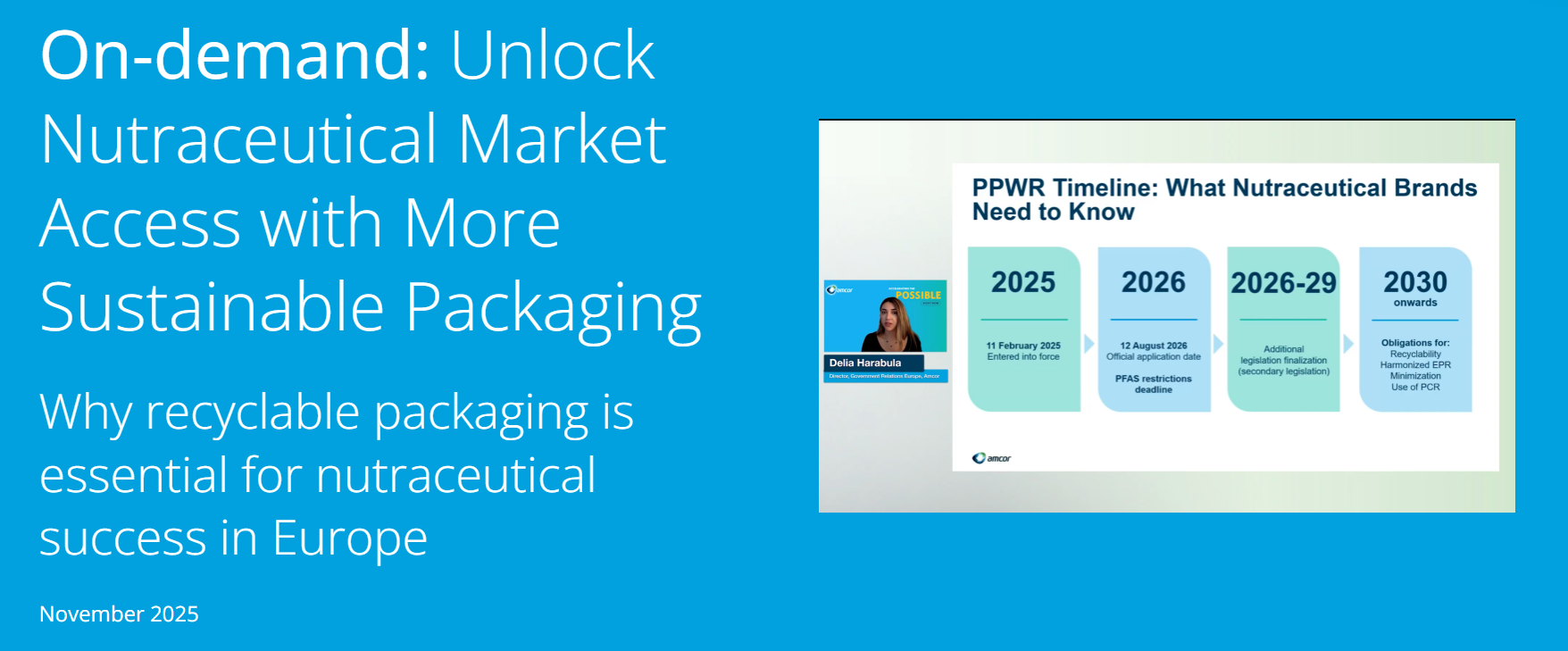
- From August 2026, companies will need to ensure compliance with stricter PFAS limits, keeping levels below 50 parts per million (ppm).
- By August 2028, packaging must include a harmonized EU pictogram to inform consumers of how to properly recycle or dispose of the packaging.
- Looking ahead to January 2030, further measures will reinforce circularity, including minimum recyclability performance grades (A, B or C), the integration of at least 10% post-consumer recycled plastic, and a continued focus on packaging minimization. At the same time, Extended Producer Responsibility (EPR) fee structures will reflect recyclability performance across EU member states.
For nutraceutical and consumer health brands, these changes highlight the need to design packaging that meets regulations, supports improved sustainability and works effectively for the product inside.
2. Analyze Your Options: Four Approaches for PPWR
These four approaches can help you redesign packaging to meet PPWR requirements without compromising:
1) Adhere to strict PFAS limits
2) Optimize Material Usage
From August 2026, PPWR will restrict PFAS levels in food packaging (including most nutraceuticals and supplements) to below 50 ppm. To prepare, review all contact packaging components and materials, engage with suppliers, and assess alternative solutions where needed.
PPWR requires brands to minimize packaging. By 2027, limits on empty space and wall thickness will apply. Using less material can help you:
- Reduce EPR fees (which scale with weight)
- Lower material costs
- Improve transport efficiency
Material optimization must maintain packaging performance—pack integrity, product stability and, where appropriate, child resistance. These functional requirements are critical for consumer health products.
3) Transition to Materials Designed for Recycling
Under PPWR, packaging must be designed for recycling. The EU will introduce standard recyclability criteria and all brands must comply by 2030.
Materials that can support recyclability include:
- Mono-material PE or PP for blisters, pouches, and stick packs
- igid HDPE, PP and PET bottles and jars (but note that PET in flexible packaging such as bags and pouches is NOT recyclable)
- Paper-based flexible packaging, where appropriate for the application
If your packaging uses multiple materials or complex structures, start evaluating alternatives now. Waiting may leave too little time for development and testing.
4) Integrate Post-Consumer Recycled (PCR) Content
Starting in 2030, plastic packaging must contain a minimum percentage of recycled content. While pharmaceutical and medical packaging is exempt, most wellness and supplement products are not.
To prepare, you can:
- Identify where post-consumer recycled (PCR) content from advanced recycled material (ARM) can be integrated, and be sure that it’s tracked and certified through a mass balance approach. Advanced recyclates (for example, from chemical recycling or CleanStream®) can match virgin polymer properties and may be suitable for food-contact applications. Because these materials are equivalent to virgin plastics, they typically do not impact performance or require revalidation.
- Validate suppliers and verify the chain of custody so PCR can be traced through the supply chain.
- Consider ISCC+ certification and build documentation to support compliance audits.
3. Prioritize Based on Feasibility and Impact
Not every packaging change delivers the same value. Evaluate options based on:
✓ Feasibility: Are recycle-ready alternatives currently available? Will they pass stability testing? Can your production lines run them?
✓ Expected impact: Assess implications for cost, EPR fees, and operational efficiency. Better recyclability performance may reduce EPR fees, but product protection remains a primary driver.
✓ Implementation timeline: Mono-material transitions may take months of testing, while design optimizations may take weeks. And a transition to PCR requires supplier verification.
Start with the formats that require the most redesign, so you have enough time for development and validation.
4. Designing for Recyclability: From Guidelines to Measurable Performance
Design for recyclability under PPWR is becoming clearer and more practical, helping nutraceutical and consumer health brands understand what is expected and where to focus. By the end of 2026, updated CEN standards, EU-wide guidelines for design for recyclability, are expected to be finalized, followed by formal rules in 2028. From 2030, all packaging will need to be “recycle-ready” in alignment with CEN guidelines.
For consumer health brands, three priorities stand out:
1. Simplify packaging structures: favor mono-material solutions and reduce complex combinations that can interfere with recycling.
2. Review all packaging components, including caps, labels, inks and adhesives, not just the main pack, as each element can impact recyclability performance.
3. Identify potential gaps early by recognizing where current packaging designs may fall short of future requirements and prioritizing those areas for improvement.
By starting now, you can reduce compliance risk, avoid late-stage redesigns and ensure packaging remains compatible with recycling systems, while continuing to meet the performance and safety requirements critical to your products.
Need Guidance on Your PPWR Redesign?
Our packaging experts understand the unique requirements of consumer health products and can help you navigate material choices, recyclability design, PCR integration and regulatory planning.
We'll work with you to develop solutions that meet PPWR requirements while maintaining product protection and cost efficiency.
Book a meeting with our packaging experts to discuss your packaging needs. You can also subscribe to our newsletter for the latest sustainability and industry updates.
Related Insights
How Are Regulations and Trends Reshaping Consumer Health Packaging?
Consumer health packaging plays a critical role in product safety, compliance and consumer trust. Download this free e-book and get a clear, practical overview of the key trends and regulatory developments affecting consumer health packaging.
Consumer health packaging plays a critical role in product safety, compliance and consumer trust. Download this free e-book and get a clear, practical overview of the key trends and regulatory developments affecting consumer health packaging.
EPR Fees for Consumer Health Packaging: What You Need to Know in 2026
Learn how Extended Producer Responsibility (EPR) fees influence consumer health packaging costs, compliance requirements and design decisions. A practical guide for consumer health brands preparing for evolving EU regulations.
Learn how Extended Producer Responsibility (EPR) fees influence consumer health packaging costs, compliance requirements and design decisions. A practical guide for consumer health brands preparing for evolving EU regulations.
Understanding PCR in Consumer Health Packaging: What Brands Need to Know
Discover how post-consumer recycled (PCR) content can be safely and confidently integrated into consumer health packaging. Learn how advanced recycling, mass balance and certified materials help brands protect product performance while preparing for upcoming PPWR requirements.
Discover how post-consumer recycled (PCR) content can be safely and confidently integrated into consumer health packaging. Learn how advanced recycling, mass balance and certified materials help brands protect product performance while preparing for upcoming PPWR requirements.