Iconic Cadbury Easter Treats Now in AmFiniti™ Recycled Packaging
Insights
Reading time: 2 minutes
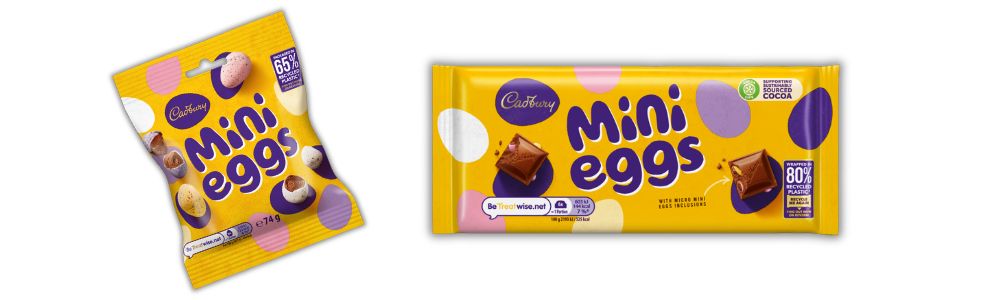
This Easter, Mondelēz International reached a new milestone in their sustainable packaging journey. In collaboration with Amcor, Mondelēz International developed new packaging for their Cadbury Mini Eggs range. The bags will now contain 65% certified recycled plastic, allocated through a mass balance approach and produced using Amcor’s AmFiniti™ Recycled Content.
This Easter, Mondelēz International reached a new milestone in their sustainable packaging journey. In collaboration with Amcor, Mondelēz International developed new packaging for their Cadbury Mini Eggs range. The bags will now contain 65% certified recycled plastic, allocated through a mass balance approach and produced using Amcor’s AmFiniti™ Recycled Content.
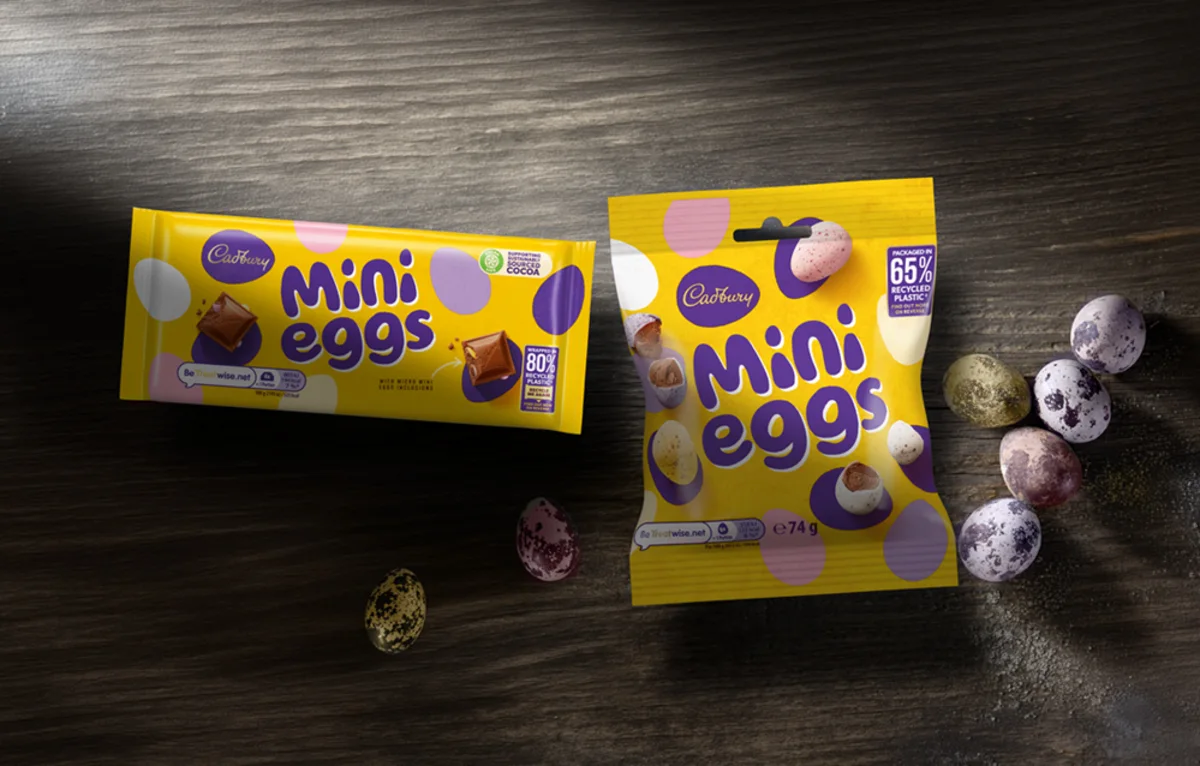
This shift toward higher recycled content extends across other seasonal products as well. Small and large Cadbury Easter tablets will now be packaged in 80% certified recycled plastic, also allocated through a mass balance approach using Amcor’s AmFiniti™ Recycled Content.
These initiatives demonstrate how packaging innovation can be implemented at scale. Through this partnership, approximately 134 tonnes of post-consumer recycled plastic will be sourced this year to produce packaging across different parts of the Cadbury Easter range. This is equivalent to around 16 million seasonal tablets per year and 70 million bags of Mini Eggs per year.* This progress has been made possible through advanced recycling technology, which enables post-consumer plastic waste to be transformed into high-quality recycled materials suitable for food packaging.**
Joanna Dias, UK&I Sustainability Lead at Mondelēz International, said: “Our Cadbury Mini Eggs range is an iconic Easter treat, loved by people across the UK and Ireland, and this is an exciting moment to increase our use of recycled plastic packaging across the Easter range. Continuing our partnership with Amcor to grow our impact, our Cadbury Mini Eggs this Easter are another fantastic milestone for Mondelēz UK&I as we work towards the delivery of Mondelēz’s global sustainability goals, namely, reducing our use of virgin plastic.”
Additionally, Mondelez has replaced the ribbon handle previously used on the Cadbury Special Gesture Easter Egg range with a recyclable cardboard handle, further supporting their packaging sustainability goals.
Enabling food-grade recycled packaging
Behind this transition is AmFiniti™, Amcor’s portfolio of mechanically recycled and chemically recycled materials for use in packaging. For food applications, AmFiniti™ leverages advanced recycling technology which transforms post-consumer plastic waste into recycled materials with the equivalent quality and performance as virgin resin, meeting the requirements of food-contact packaging.
This helps reduce reliance on new fossil resources while giving plastics a second life, allowing brands to increase recycled content without compromising product safety or packaging performance. When using advanced recycled content, AmFiniti™ can be certified under the ISCC system using a mass balance approach.
Increasing transparency for consumers
Beyond material innovation, Mondelēz International is also increasing transparency around packaging sustainability. Cadbury Mini Eggs bags (31.9g, 74g and 256g) will feature a scannable QR code on the back of the pack, providing consumers with additional information about the recycled materials used and Mondelēz International’s broader approach to more sustainable packaging. This added visibility reflects the growing importance of clear communication as brands introduce new packaging solutions.
Growing consumer demand for incorporating recycled content in packaging
Amcor’s most recent consumer research highlights the increasing role that recycled materials play in shaping purchasing decisions:
• 79% of European consumers believe using recycled plastic is an effective way to reduce environmental impact.***
• 63% of European consumers say recycled content increases their trust in a brand.***
These insights underline a clear opportunity for brands to strengthen consumer trust and preference by incorporating recycled materials into their packaging strategies.
Check the full research report, "Recycled Content, Real Impact" to access the complete data and insights here
**The sourcing approach used by Mondelēz International for its recycled material and used by many other companies and commodities around the world is called mass balance. The mass balance approach is a chain of custody method used to trace the flow of alternative feedstocks through complex value chains. During the production process, certified feedstocks are mixed with conventional materials, resulting in products that are physically indistinguishable from those made solely from conventional feedstocks. As the certified and non-certified materials are physically mixed, it is not possible to refer to the exact physical content of the certified material in the product. Mondelēz International uses ISCC-certified material aligned to a set of sustainability standards. For more information on mass balance and ISCC certification, please visit Mass Balance Explained – ISCC System (iscc-system.org)
*** Amcor research based on 3,201 grocery shoppers aged 18 – 55+ in France, Germany, Italy, Poland, Spain and UK
Related Insights
New Research: What European Shoppers Think About Post-Consumer Recycled (PCR) Material in Packaging
Our new consumer study, Recycled Content, Real Impact, explores what European shoppers really think about post-consumer recycled (PCR) content in packaging for common supermarket products. How are those views shaping brand trust, on-pack communication, and decision-making for FMCG leaders and retailers?
Our new consumer study, Recycled Content, Real Impact, explores what European shoppers really think about post-consumer recycled (PCR) content in packaging for common supermarket products. How are those views shaping brand trust, on-pack communication, and decision-making for FMCG leaders and retailers?
Amcor and Alter Eco launch a paper-based, lighter wrap for organic chocolate
Amcor teamed up with Alter Eco, the French organic snack producer, to introduce a recyclable* paper-based, lightweight packaging solution for its 200g chocolate range.
Rooted in responsibility, Alter Eco saw packaging as a clear opportunity to go further in its sustainability journey. With AmFiber™ Performance Paper, the new pack delivers up to 61% weight reduction versus the previous solution...
Amcor teamed up with Alter Eco, the French organic snack producer, to introduce a recyclable* paper-based, lightweight packaging solution for its 200g chocolate range.
Rooted in responsibility, Alter Eco saw packaging as a clear opportunity to go further in its sustainability journey. With AmFiber™ Performance Paper, the new pack delivers up to 61% weight reduction versus the previous solution...
How Mondelēz International is moving to 80% recycled plastic packaging for Cadbury sharing bars
Mondelez International is making the packaging for their iconic Cadbury core sharing bars more circular. The new packaging, which will be sold in the UK and Ireland, will be made using 80% certified recycled plastic, which can be attributed to plastic sourced from advanced recycling technology and uses ISCC PLUS certification.**
Mondelez International is making the packaging for their iconic Cadbury core sharing bars more circular. The new packaging, which will be sold in the UK and Ireland, will be made using 80% certified recycled plastic, which can be attributed to plastic sourced from advanced recycling technology and uses ISCC PLUS certification.**