New Research: What European Shoppers Think About Post-Consumer Recycled (PCR) Material in Packaging
Insights
Reading time: 2 minutes
Our new consumer study, Recycled Content, Real Impact, explores what European shoppers really think about post-consumer recycled (PCR) content in packaging for common supermarket products. How are those views shaping brand trust, on-pack communication, and decision-making for FMCG leaders and retailers?
Our new consumer study, Recycled Content, Real Impact, explores what European shoppers really think about post-consumer recycled (PCR) content in packaging for common supermarket products. How are those views shaping brand trust, on-pack communication, and decision-making for FMCG leaders and retailers?
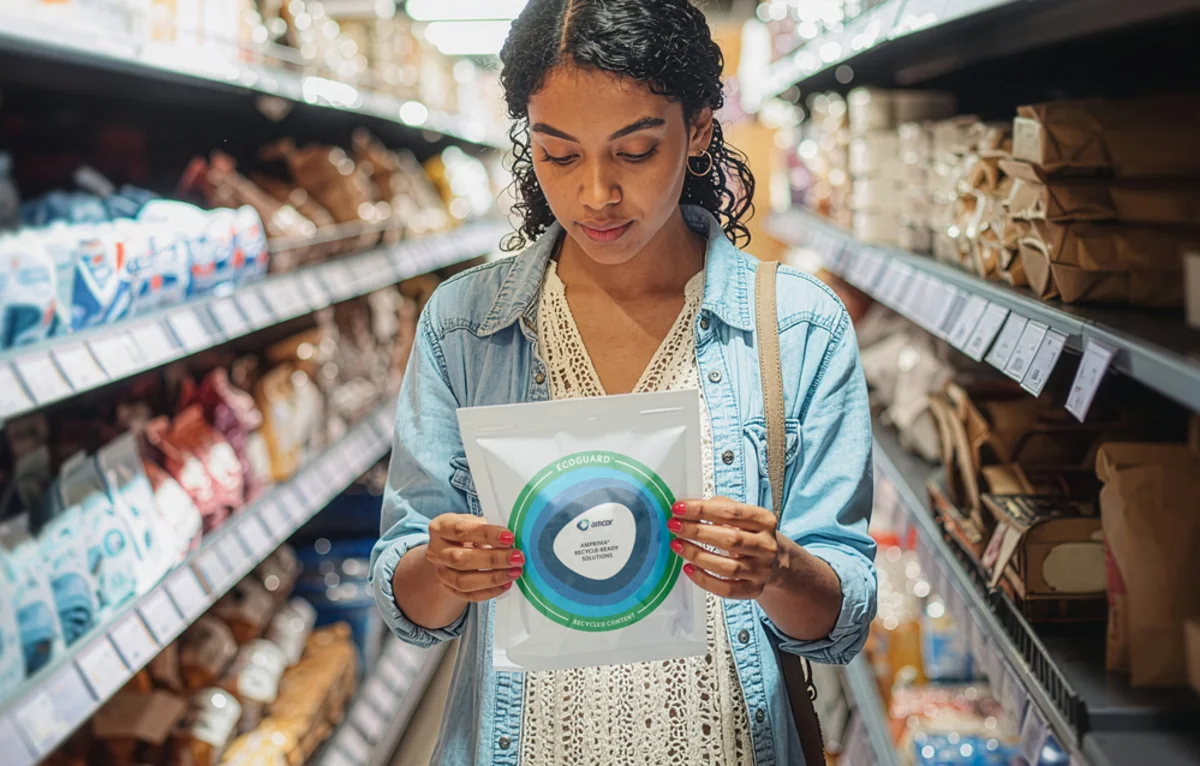
Awareness and adoption of PCR are already mainstream
Across Europe, consumer awareness that some products use recycled plastic in their packaging is exceptionally high. Shoppers are noticing – 91% are aware of post-consumer recycled (PCR) content. And in many cases, they are actively choosing products with recycled content – 76% have knowingly purchased packaging containing PCR.
For brands, that means PCR is no longer an unfamiliar innovation: it’s understood, and part of how consumers evaluate whether a company is doing the right thing for the environment.
The halo effect is real, and consumers feel positive about PCR
Consumers understand PCR content and they feel good about it. In fact, 79% of European consumers believe using recycled plastic is an effective way to reduce environmental impact.

When brands communicate clearly about recycled content, it lifts perceptions. Over half (63%) of consumers report that seeing on-pack communication about PCR increases their trust in the brand.
Most shoppers say PCR makes no difference to pack quality, while younger consumers are even more positive, with many (34% of those age 18-34) viewing PCR packs as higher quality. For brands, that’s a powerful combination: gaining trust without compromising performance or quality perception.
How can brands build credibility on pack?
Shoppers reward transparency. They want to see the percentage of recycled content, ideally on the front of the pack; and 79% want to see independent certification. QR codes that signpost deeper information also help. What matters most is being specific, consistent, and easy to understand.
What to show on pack:
• Percentage of recycled material used
• Third-party certification
• Clear benefits in plain language
• Where appropriate, the source of the recycled material

Why does PCR matter now?
European shoppers increasingly see themselves as participants in a circular economy, with recycling now an engrained habit for most. At the same time, the European Union’s Packaging and Packaging Waste Regulation (PPWR) will require minimum percentages of recycled content in most plastic packaging staring from 2030. Today, some countries already use a reduction in plastic taxes and Extended Producer Responsibility (EPR) fees to reward adoption of PCR.
How to get started with PCR in your packaging
1. Be recycle-ready. Designing for recyclability (often via mono-material structures) helps close the loop and supports higher quality PCR feedstock.
2. Use certified PCR, and say how much. State the percentage, show the certification, and keep language simple and verifiable.
3. Back claims with data. Use a lifecycle assessment to quantify sustainability outcomes and communicate credibly.
Get the full report
Download the full report to explore more of the data, discover our research team’s five key insights, hear from the experts, and get practical advice on using PCR in your packaging.
Source: Recycled Content, Real Impact, published in February 2026, is based on insights gathered through a survey of 3,201 European consumers and 32 individual interviews, conducted in 2025 across France, Germany, Spain, Italy, Poland and the UK.
Related Insights
Amcor and Alter Eco launch a paper-based, lighter wrap for organic chocolate
Amcor teamed up with Alter Eco, the French organic snack producer, to introduce a recyclable* paper-based, lightweight packaging solution for its 200g chocolate range.
Rooted in responsibility, Alter Eco saw packaging as a clear opportunity to go further in its sustainability journey. With AmFiber™ Performance Paper, the new pack delivers up to 61% weight reduction versus the previous solution...
Amcor teamed up with Alter Eco, the French organic snack producer, to introduce a recyclable* paper-based, lightweight packaging solution for its 200g chocolate range.
Rooted in responsibility, Alter Eco saw packaging as a clear opportunity to go further in its sustainability journey. With AmFiber™ Performance Paper, the new pack delivers up to 61% weight reduction versus the previous solution...
6 things to know about the EU Packaging & Packaging Waste Regulation (PPWR)
You’ve certainly heard about the new European Union Packaging and Packaging Waste Regulation (PPWR). Maybe you even know a little about it. Yet, you might be wondering what it means for your business, your consumers, and the planet. Read on to learn more.
You’ve certainly heard about the new European Union Packaging and Packaging Waste Regulation (PPWR). Maybe you even know a little about it. Yet, you might be wondering what it means for your business, your consumers, and the planet. Read on to learn more.
More sustainable packaging: 5 common questions
Bust common sustainability myths, with the five most common questions our packaging sustainability experts hear. Gerald Rebitzer, Sustainability Director, shares his answers.
Bust common sustainability myths, with the five most common questions our packaging sustainability experts hear. Gerald Rebitzer, Sustainability Director, shares his answers.