Progress on the path to packaging sustainability: 4 key actions for brands in 2026
Insights
Reading time: 4 minutes
Two recent European sustainability conferences brought together industry leaders, regulators, and innovators to address one question: how can we accelerate packaging circularity while meeting regulatory needs and consumer expectations? Gerald Rebitzer, VP Sustainability Operations & Advocacy, shares his insights.
Two recent European sustainability conferences brought together industry leaders, regulators, and innovators to address one question: how can we accelerate packaging circularity while meeting regulatory needs and consumer expectations? Gerald Rebitzer, VP Sustainability Operations & Advocacy, shares his insights.
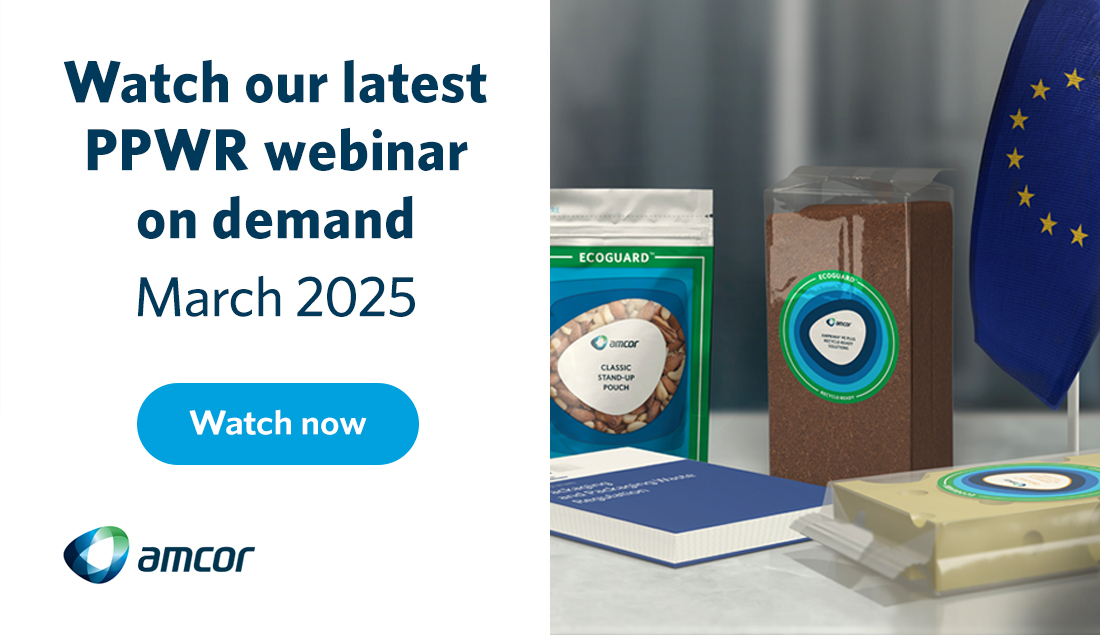
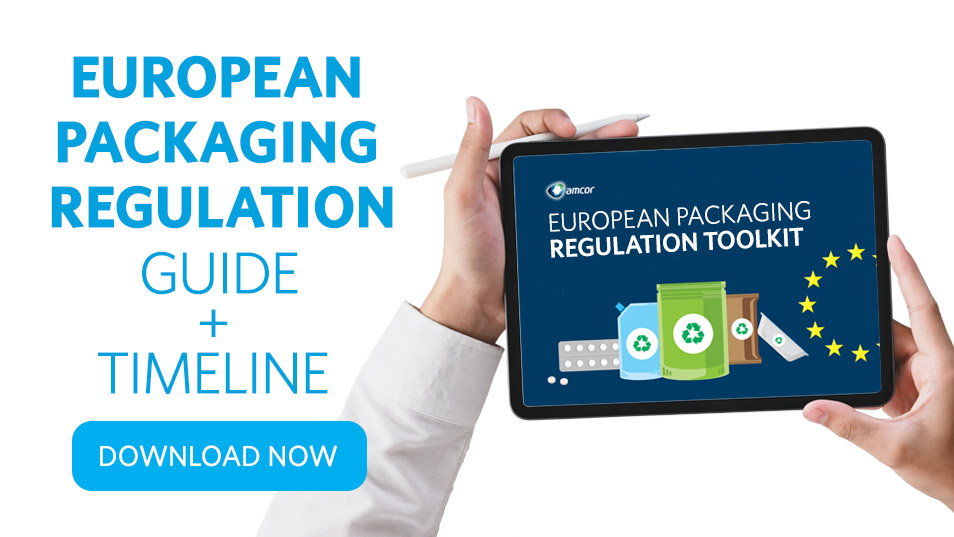
The EU’s Packaging and Packaging Waste (PPWR) regulation continues to reshape the packaging landscape. Some have expressed concern around the complexity of those regulations, as well as multiple mandatory deadlines, so it’s easy to see why brands might not know which action to take first.
But progress doesn’t need to stall, and importantly, the European Commission has made clear that the Environmental Omnibus package does not reopen or alter the core provisions of PPWR. As an industry, the direction of travel is clear.
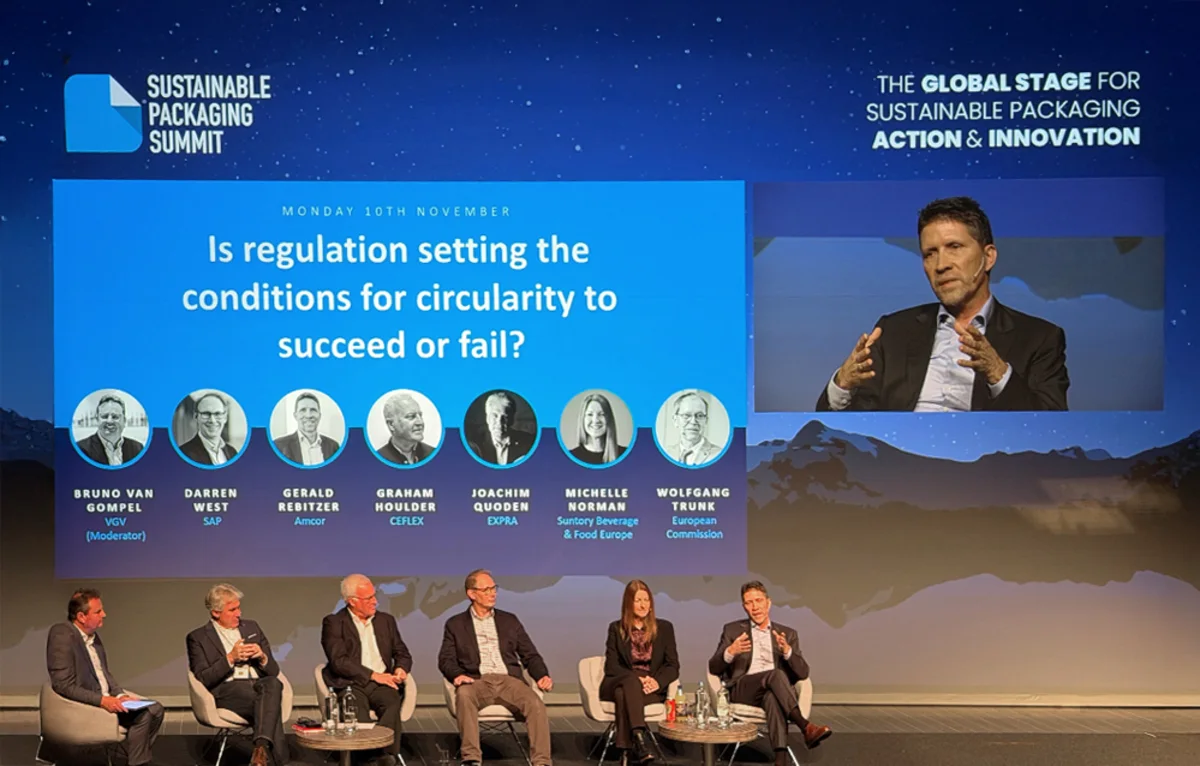
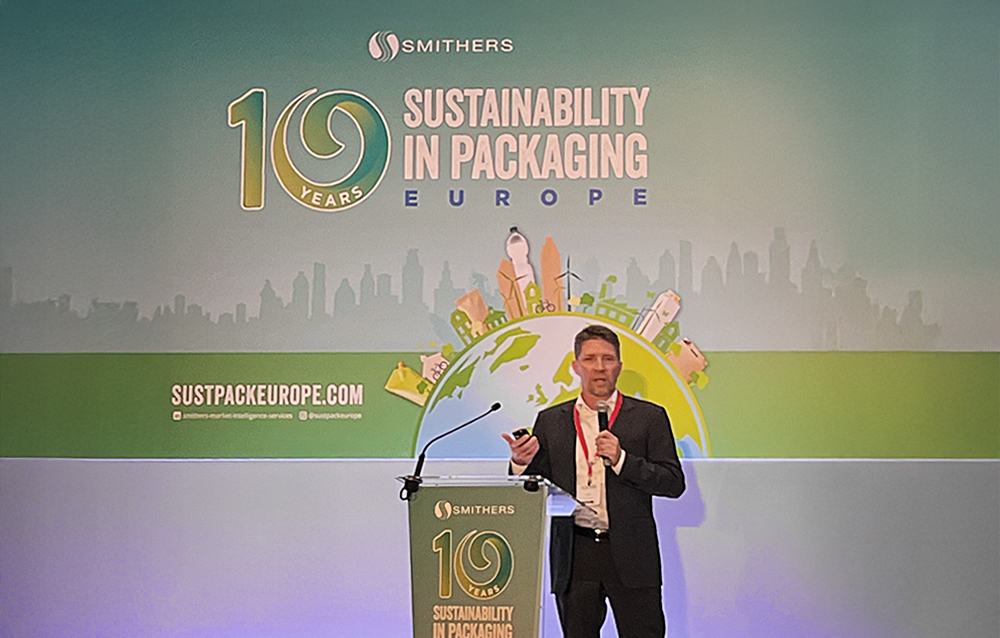
Here are some of the key takeaways from Sustainability in Packaging Europe 2025 (Barcelona) and Sustainable Packaging Summit 2025 (Utrecht) that can support your PPWR readiness and packaging sustainability decisions in 2026.
Takeaway 1: Regulatory clarity drives confidence – and action
PPWR provides a roadmap for packaging circularity in the years to come. Speakers at both events were unanimous in their views: regulation requires clarity, and clarity drives action.
Which was why it was important to hear firsthand from the EU Commission during the Sustainable Packaging Summit, that the PPWR is here to stay and is not impacted by the Environmental Omnibus package. Supported by the full value chain, PPWR also demonstrates that competitiveness and sustainability are not opposing forces.
The arrival of CEN’s Design for Recycling standards for plastic packaging in early 2026 is marking a turning point, replacing over 20 national guidelines with one universal EU standard and creating the basis for PPWR recyclability assessments. Even though the PPWR’s final Design for Recycling rules and A‑B‑C scoring will only land in late 2027, the CEN framework offers a solid, European-aligned foundation that allows brands to move forward with confidence now. Further CEN technical reports for all other major packaging materials will also be published in 2026.
Take action now
“One thing is clear: it’s time to start designing for recycling today. CEN guidelines are arriving this year. Brands should take immediate steps to implement design for recyclability, incorporate more PCR plastics, and prepare for PPWR overall. Acting now ensures you’re prepared for upcoming mandatory requirements and able to continue selling your products in the EU market.”
Gerald Rebitzer, Amcor VP Sustainability Operations and Advocacy, Europe and Asia Pacific
Takeaway 2: We must build capacity for recycled content
By 2030, recycled content must account for 35% of plastic in non-contact-sensitive packaging, and 10% of plastic in contact-sensitive packaging. Meeting these PPWR targets will require significant investment across Europe’s recycling ecosystem.
For instance, Europe’s current flexible packaging post-consumer recyclate capacity (from both mechanical and chemical recycling) is under 2.5 million tonnes (CEFLEX, 2022), far short of the infrastructure needed for future compliance. To achieve recycling rates required to satisfy future demand, total capacity for flexible packaging recycling will need to increase to 8 million tonnes. Advances in technologies like delamination, deinking, smart sorting, and chemical recycling with Naphtha quality will be part of this much needed growth.
The EU Commission’s recently released Winter Package will play a supportive role by strengthening investment conditions for recycling. It announces the introduction of financial support mechanisms, forthcoming dedicated customs codes, and the creation of a market surveillance task force — all designed to increase transparency, improve enforcement, and create a more stable, level playing field for recyclers.
However, policy measures alone are not enough. Building demand is critical. Strong market pull — through brand commitments, long‑term procurement of PCR materials, and strategic design-for-recycling decisions — is what will ultimately secure the investment needed to expand recycling capacity across Europe.
Learn how brands in Europe are incorporating recycled content in their packaging today:
Take action now
“Ensuring growth in mechanical and chemical recycling is going to be essential to guarantee availability and quality of recyclates for the 2030 deadline. Brands can drive growth and secure their supply of PCR by choosing to incorporate it now.”
Gerald Rebitzer
Takeaway 3: Circularity and decarbonization work together
While PPWR readiness was a hot topic at both conferences, decarbonization was also high on the agenda. Importantly, brands’ circular packaging decisions can support their overall decarbonization commitments.
Whether switching out complex multi-material packaging solutions for mono-material recycle-ready options, or incorporating mechanically recycled content to replace virgin resins, brands have options to decarbonize today while also preparing for PPWR commitments. Designing for reduced material use can lower packaging's carbon footprint, while also meeting the minimization goals of the PPWR.
Take action now
“Circularity and decarbonization are two sides of the same coin. Solutions like the recycle-ready and lower carbon footprint AmLite HeatFlex® pouch and our rigid Deo Stick made using recycled content, are specifically designed to help brands accelerate their sustainability progress. The Amcor team has the tools and experience to help you understand the full life cycle impact, including carbon footprint, of different PPWR-ready packaging choices.”
Gerald Rebitzer
Takeaway 4: Use paper where paper makes sense
Paper plays a crucial role in the circular economy of packaging. It appeals to consumers’ preference for more “natural” materials, and benefits from high recycling rates across Europe, making paper an interesting option for many brands.
In these recent industry conferences, paper experts discussed:
- Sustainability improvements in paper production, supporting the full supply chain’s decarbonization progress.
- New innovations such as Amcor’s dual-end of life paper packaging that meets the criteria to be both recyclable and compostable at its end of life.
- Best practice recommendations for making packaging decisions based on Life Cycle Assessments that compare paper packaging with other materials (rather than simply assuming paper is always better).
Take action today
“Paper has a significant role to play – but it must make sense in combination with the product inside the packaging. Understand how paper can play a role in your packaging choices by carrying out a life cycle assessment to uncover sustainability implications.”
Gerald Rebitzer
As 2025 came to a close, the industry spoke with one voice: collaboration and regulatory clarity are essential to enhance sustainability efforts – both for circularity and decarbonization.
Amcor is committed to helping brands navigate complexity and deliver packaging that meets regulatory requirements, drives circularity, and exceeds consumer expectations.
Let’s work together to make more sustainable packaging a reality and prepare your packaging for PPWR and beyond.
If you want to stay up-to-date on the latest developments in packaging, sign up for our newsletter or contact us to set up a discussion with our team.
Note: The information provided in this article is for informational purposes only and should not be taken as legal advice. While we strive to ensure the accuracy of the information as of the date of publication, it is not intended to replace professional legal consultation.
Vice President Sustainability Operations & Advocacy, EMEA & Asia-Pacific
See LinkedinRelated Insights
6 things to know about the EU Packaging & Packaging Waste Regulation (PPWR)
You’ve certainly heard about the new European Union Packaging and Packaging Waste Regulation (PPWR). Maybe you even know a little about it. Yet, you might be wondering what it means for your business, your consumers, and the planet. Read on to learn more.
You’ve certainly heard about the new European Union Packaging and Packaging Waste Regulation (PPWR). Maybe you even know a little about it. Yet, you might be wondering what it means for your business, your consumers, and the planet. Read on to learn more.
More sustainable packaging: 5 common questions
Bust common sustainability myths, with the five most common questions our packaging sustainability experts hear. Gerald Rebitzer, Sustainability Director, shares his answers.
Bust common sustainability myths, with the five most common questions our packaging sustainability experts hear. Gerald Rebitzer, Sustainability Director, shares his answers.
Infographic: Understanding recycled content for flexible packaging in Europe
Are you confused about the difference between mechanical and chemical recycling? Are you curious to learn how mass balance works for chemical recycling? Our latest infographic answers these exact questions. Read on to learn more.
Are you confused about the difference between mechanical and chemical recycling? Are you curious to learn how mass balance works for chemical recycling? Our latest infographic answers these exact questions. Read on to learn more.