Packaging under pressure: how requirements are shifting across Europe’s feed and bedding markets
Insights
Reading time: 4 minutes
Discover the key trends behind the shift in Europe’s feed and bedding markets as producers respond to new regulations, rising sustainability expectations and tighter performance demands on fast‑moving production lines.
Discover the key trends behind the shift in Europe’s feed and bedding markets as producers respond to new regulations, rising sustainability expectations and tighter performance demands on fast‑moving production lines.
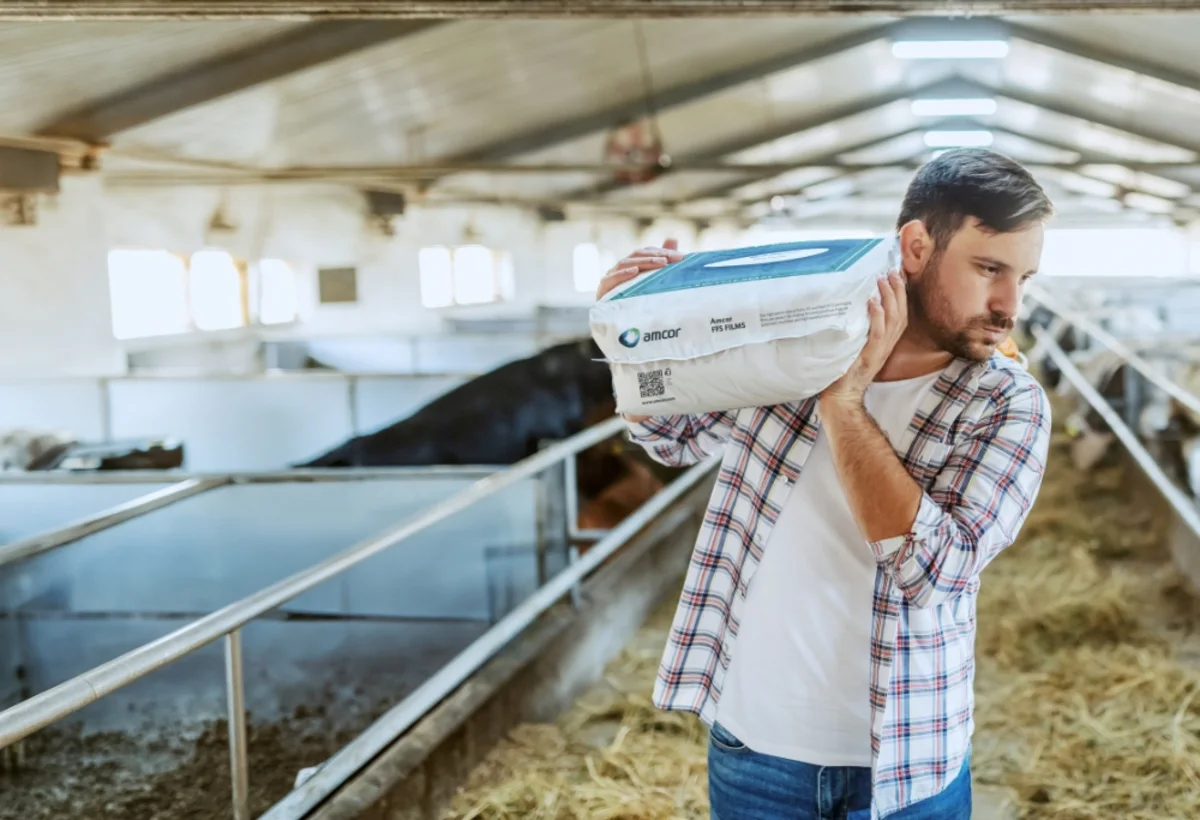
Across Europe, packaging is playing a more complex role in animal feed and bedding operations, as producers respond to changing operational demands, supply chain pressures and evolving regulatory expectations.
While efficiency and output remain key priorities, there is growing focus on consistency, flexibility and the ability to adapt to changing market conditions.
A more complex operating environment
Producers across the UK and mainland Europe are working within an increasingly demanding landscape.
Regulatory developments, including Extended Producer Responsibility (EPR) schemes and the Packaging and Packaging Waste Regulation (PPWR), are placing greater emphasis on how packaging is designed, used and reported.
At the same time, interest in recycled content continues to grow, although availability and consistency of supply can vary depending on the application and market.
Together, these factors are encouraging producers to take a more considered approach to packaging – looking not only at performance, but also at how solutions fit within wider operational and regulatory requirements.
For many, understanding how packaging choices align with evolving requirements is becoming more complex. Access to regulatory expertise and sustainability insight can help support this process. Tools such as Amcor’s ASSET™ packaging lifecycle assessment model can be used to compare and evaluate the environmental impact of different materials, recycled content and overall lifecycle impact, supporting more informed decision-making.

Shifting towards more flexible packaging formats
One of the most visible changes across the sector is the continued shift in packaging formats.
Pre-made bags have traditionally been widely used, but many producers are now adopting form-fill-seal (FFS) and single wound sheet (SWS) solutions.
These formats offer higher filling speeds and greater flexibility, while also enabling simplification of packaging ranges. Generic printed films can be used across multiple products and post-marked on the packing line, helping to reduce the number of SKUs and streamline inventory.
For many operations, this supports more efficient and adaptable production processes, particularly in multi-product or high-throughput environments.
The importance of consistent performance
As production lines become faster and more automated, the performance of packaging materials is becoming increasingly important.
Film consistency, material strength and seal integrity all play a role in maintaining stable operation, helping to reduce downtime, minimise product loss and support smooth running on high-speed lines.
Achieving this level of consistency often requires close collaboration between material development and application. Across Europe, dedicated R&D and technical teams work alongside customers to test, refine and validate film performance under real production conditions, helping to ensure materials deliver reliably at scale.
Different applications, different requirements
Packaging requirements can vary significantly depending on the end use.
In animal feed, particularly for export markets or specialist products such as birdseed, multi-layer co-extruded films may be required to provide enhanced protection and compatibility with processes such as gas flushing.
In bedding applications, low-density, high-volume products such as wood shavings and straw present different challenges. These products require durable films that can withstand handling and transport, while also protecting against moisture and dust. In retail settings, print quality and on-pack presentation also remain important.
Understanding these differences is key to selecting the right packaging solution for each application.

Sustainability as part of everyday decision-making
Sustainability is now part of everyday packaging decision-making across much of the sector, shaped by both regulatory requirements and customer expectations.
Producers supplying into certain markets are increasingly required to consider how packaging aligns with evolving legislation, including recyclability, where appropriate collection and recycling systems exist.
At the same time, interest in recycled content continues to grow, and in many cases is becoming an expected part of packaging specifications, although availability and consistency of supply can vary depending on the application. The quality of recycled plastic can vary considerably and may not be suitable for certain applications, requiring careful consideration of how it impacts film performance, processing and consistency on-line.
In this context, access to reliable recycled material streams and processing capability is increasingly important. Amcor’s vertically integrated flexible recycling operations, including facilities in Heanor, UK and Steinfeld, Germany, support the development and supply of recycled content, with greater control over material quality and consistency for non-contact sensitive applications.
Alongside this, ongoing developments in film design are enabling reduced material usage without compromising strength or functionality.
Supporting performance in practice
Addressing these challenges requires more than selecting the right material. It involves understanding how packaging performs within the full production and supply chain environment.
In practice, this means working closely with producers to:
review and optimise film specifications based on product and application requirements
- align materials with machine settings and filling conditions to ensure consistent performance
- simplify packaging portfolios where possible, reducing SKU complexity and improving operational efficiency
- support transitions between formats, such as from pre-made bags to FFS or SWS
This work is underpinned by a combination of material innovation, technical expertise and manufacturing capability across the region.
Innovation centres such as Amcor’s facility in Ghent, Belgium support the development and testing of new film structures, while regional manufacturing sites provide the scale and flexibility required to supply consistently across multiple markets.
At the same time, experienced technical and R&D teams across Europe work directly with customers to troubleshoot challenges, validate performance and support implementation on-line.
Together, this enables a more connected approach – linking material development, production and application to ensure packaging performs reliably in day-to-day operations, not just under test conditions.
An evolving role for packaging
As the sector continues to develop, packaging is becoming more closely linked to overall operational performance.
Rather than being treated as a standalone component, it is increasingly considered as part of a wider system – supporting efficiency, consistency and the ability to adapt to changing requirements.
For producers across Europe, this means taking a more balanced approach to packaging decisions, considering not only cost and output, but also performance, flexibility and long-term fit within their operations.
Working with partners who can combine material innovation, regulatory understanding, technical expertise and the scale to deliver consistently across markets will be key to navigating this increasingly complex environment.
Related Insights
New Research: What European Shoppers Think About Post-Consumer Recycled (PCR) Material in Packaging
Our new consumer study, Recycled Content, Real Impact, explores what European shoppers really think about post-consumer recycled (PCR) content in packaging for common supermarket products. How are those views shaping brand trust, on-pack communication, and decision-making for FMCG leaders and retailers?
Our new consumer study, Recycled Content, Real Impact, explores what European shoppers really think about post-consumer recycled (PCR) content in packaging for common supermarket products. How are those views shaping brand trust, on-pack communication, and decision-making for FMCG leaders and retailers?
6 things to know about the EU Packaging & Packaging Waste Regulation (PPWR)
You’ve certainly heard about the new European Union Packaging and Packaging Waste Regulation (PPWR). Maybe you even know a little about it. Yet, you might be wondering what it means for your business, your consumers, and the planet. Read on to learn more.
You’ve certainly heard about the new European Union Packaging and Packaging Waste Regulation (PPWR). Maybe you even know a little about it. Yet, you might be wondering what it means for your business, your consumers, and the planet. Read on to learn more.
Infographic: What European consumers really think about packaging & sustainability
What do consumers look for when they shop for "eco-friendly" packaging? Our latest research reveals how European consumers’ perceptions and expectations of sustainability packaging claims have changed from 2020 to 2023. Learn more in our infographic below.
What do consumers look for when they shop for "eco-friendly" packaging? Our latest research reveals how European consumers’ perceptions and expectations of sustainability packaging claims have changed from 2020 to 2023. Learn more in our infographic below.