Sustainability in Packaging Europe 2026: Four takeaways from Barcelona
Sustainability
Reading time: 2 minutes
More than 600 packaging professionals gathered in Barcelona this October for the Sustainability in Packaging Europe 2026 conference, hosted by Smithers. With Europe’s Packaging and Packaging Waste Regulation (PPWR) moving from policy to implementation, the conversation centered on a practical question: how can the industry turn new requirements into packaging solutions that work at scale?
More than 600 packaging professionals gathered in Barcelona this October for the Sustainability in Packaging Europe 2026 conference, hosted by Smithers. With Europe’s Packaging and Packaging Waste Regulation (PPWR) moving from policy to implementation, the conversation centered on a practical question: how can the industry turn new requirements into packaging solutions that work at scale?
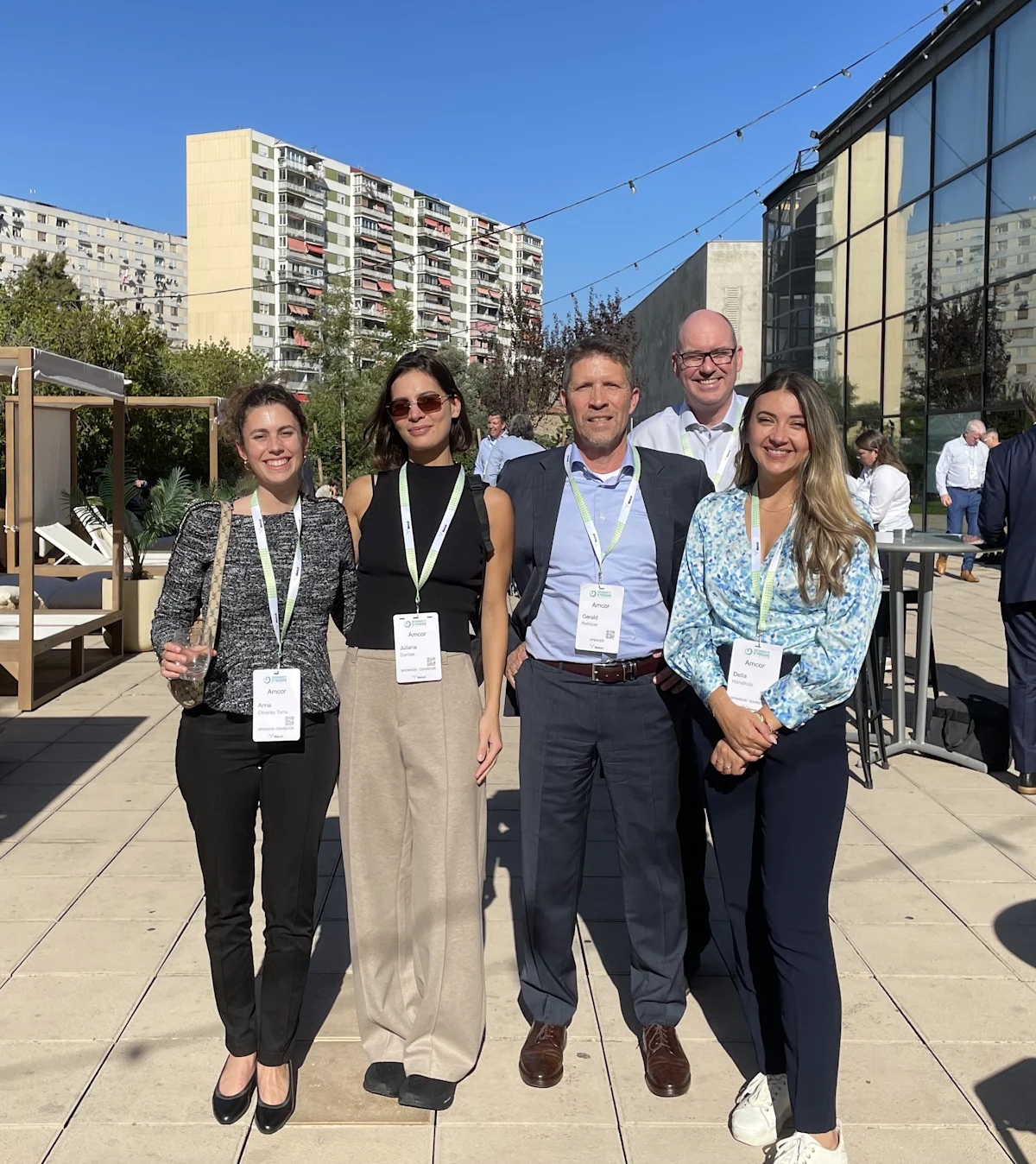
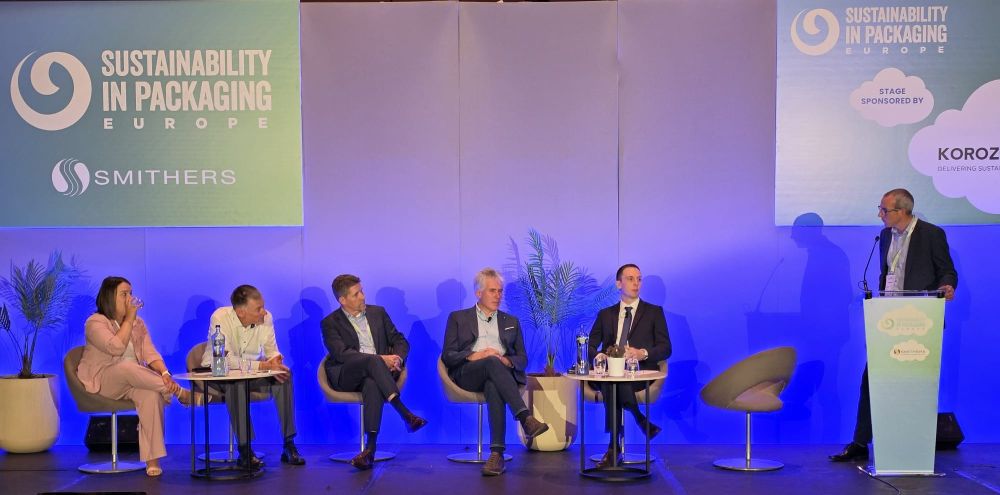
Amcor colleagues contributed to discussions throughout the event. Gerald Rebitzer, Vice President, Sustainability Operations & Advocacy Europe & Asia, joined a panel on turning PPWR into scalable solutions and chaired a session on material innovation and circular design. Mark Roberts, Director of Materials Innovations, explored how food-grade recycled polypropylene can be brought into practice at scale.
Four themes stood out during the conference:
1. Clear rules will help accelerate action
A major topic was the ongoing work to translate PPWR into detailed design-for-recycling rules. The European Commission’s Joint Research Centre has identified areas where draft testing guidance needs greater consistency, including how paper-based packaging and removable components are assessed.
Clearer, aligned assessment methods will give brands greater confidence as they move forward. At the same time, Gerald’s message was that companies should not wait for every technical detail to be finalized before taking action: there is already enough direction to review packaging portfolios and begin planning changes.
Findings from the Joint Research Centre are expected in early 2027, before the next stage of technical review.
2. Recycled material supply must grow faster
Demand for post-consumer recycled (PCR) plastic in packaging is rising quickly, but supply and recycling performance are not yet keeping pace. Industry estimates shared at the summit suggest demand could reach 2.5 million tonnes by 2030, with considerably more capacity needed in later years to meet “recycled at scale” requirements. As Gerald highlighted from the stage, progress depends on the full value chain working together—from packaging design and material supply to collection, sorting and recycling.
In his session, Mark Roberts discussed food-grade recycled polypropylene in practice and at scale, drawing on insights from CleanStream®, Amcor’s technology for mechanically recycling household polypropylene (PP) waste into high-purity material suitable for contact-sensitive packaging.
Packaging designed for recycling must be matched by systems capable of recovering materials at commercial scale.
3. Material choices need a balanced view
In the material innovation session, Gerald encouraged a practical view of circular design. Mono-material structures, recycled content and other innovations can support circularity, but the packaging must continue to protect the product inside and perform reliably. His key point was that material choices should be assessed in context, considering recyclability, carbon footprint, product requirements and the recycling systems available rather than relying on any single measure.
4. Effective EPR can support better packaging choices
Extended Producer Responsibility (EPR) systems were another focus. Data presented in Barcelona showed that more transparent systems, with fees closely linked to packaging design and recyclability, tend to deliver stronger recycling outcomes. The wider takeaway is that packaging innovation alone is not enough: clear incentives, appropriate infrastructure and cooperation across the value chain are all needed to build a circular economy.
From discussion to delivery
The Barcelona summit highlighted both the scale of the work ahead and the value of practical collaboration. Through its sessions and conversations, our team looked at solutions: designing packaging for recycling, expanding high-quality recycled materials and creating systems that reward progress. As PPWR implementation continues, we will continue to work side-by-side with our customers to transition their packaging to more sustainable solutions.
Next month, Amcor team members will also be at the Sustainable Packaging Summit in Utrecht from 10–12 November, continuing these conversations with customers and partners.