Test to the extreme: why e-commerce packaging needs rigorous analysis
Ecommerce
Reading time: 3 minutes
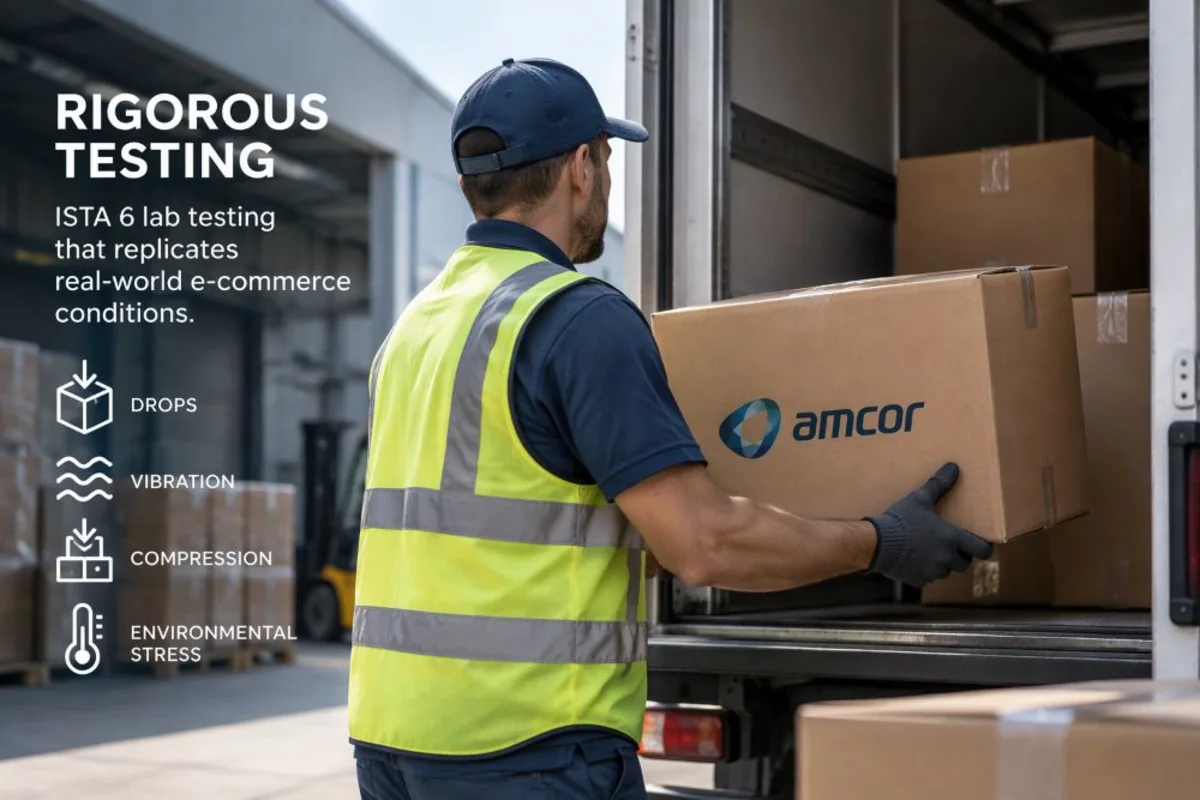
With complex supply chains, evolving logistics and increased sustainability demands, e-commerce poses a challenge for packaging design. The aim is to ensure the product reaches the end consumer safe and sound. Graeme Hood, Vice-president, R&D RPSI, examines how primary packaging needs to be robust enough to survive the supply chain without damage, excluding the need for secondary packaging.
Over the last decade, e-commerce has transformed from a niche channel into a dominant force in retail. And this trend places a greater emphasis on the performance on primary and secondary packaging – and a fundamental shift in expectations.
Packaging is no longer designed primarily for palletized transport and retail shelves; the touchpoints have broadened. It must survive automated fulfillment centers, long-distance transport and last-mile delivery networks. Delivering packages to a consumer’s door comes with greater risk - drops and impacts, compression damage and environmental stress multiply the number of potential failure points.
Protection of the product is paramount, but that’s not the only consideration for developers. E-commerce is not immune from the pressures of sustainability; across Europe, the US and emerging markets, regulators are pursuing material reduction with the goal of producing less waste. Strict ESG targets on brands are driving this, while legislation like the EU’s Packaging and Packaging Waste Regulation (PPWR) is focusing minds. The goal is clear – less material, same performance.
Demanding environments
The reshaping of packaging design to deal with the robust requirements of e-commerce requires more than just a few tweaks around the edges. The packaging is rarely static but stress-tested daily. It is therefore essential to ensure it can stand up to such rigorous demands in a complex e-commerce supply chain. This means simulating real distribution environments that reflect actual handling conditions in order to validate a pack’s performance before it is launched onto the market - all while complying with various sustainability requirements. Amcor’s philosophy is to engineer for the real world; design packaging for how products are transported. Advanced performance testing goes hand in hand-in-hand with lightweight design, material optimization and reduction, and end-to-end packaging development. And a key plank of Amcor’s approach to trialing its solutions is its in-house ISTA 6 lab.
Rigorous testing
An ISTA 6 lab is a certified testing facility that evaluates packaging using ISTA Series 6 protocols. These are advanced tests designed to replicate the real distribution environments of specific retailers or carriers like Amazon, Sam’s Club or FedEx. Amcor operates its own ISTA 6 labs to test and optimize packaging solutions internally. Unlike general packaging tests, ISTA 6 is tailored to actual supply chains, meaning it closely reflects how packages are handled, transported and stored. The labs use specialized equipment to simulate conditions such as drops, vibrations, compression and environmental factors to determine whether a packaged product can withstand a journey undamaged.
Amcor’s standard assessment is ITSA 6 Amazon.com-Over Boxing, a general simulation test for e-commerce fulfilment. This comprises an individual retail packaged product being placed into a master shipping container (known as ‘Over Box’) either by itself or the addition of air pillows or paper. The test challenges the packaging and products’ ability to withstand general damage-producing motions, forces, conditions and sequences.
After testing, the packaging and product are inspected for damage, and results are assessed against strict pass/fail criteria defined by the specific protocol. If the packaging passes, the lab issues a certification report, which can help companies meet retailer requirements, reduce packaging costs, improve sustainability and minimize damage during transit.
Guiding innovation
This rigorous approach has helped shape some of Amcor’s recent innovations, such as its Flava Flip Top Closure. Targeted for products including mayonnaise, ketchup, and sweet sauces, Flava ticks many boxes - functional, recycle-ready and lightweighted - all without compromising the closure’s performance in demanding distribution environments.
Similarly, Amcor’s Prima Refill range has been ITSA 6 tested. Available in sizes from 50ml to 200ml, Prima Refill is manufactured entirely in polypropylene (PP) and available in PCR. The refillable jar is pitched for a wide variety of personal care applications.
Developments like these also have an eye on the intensifying pressure of PPWR. The regulation mandates that all packaging be recyclable by 2030, as well as specifying minimum recycled content levels and sector-specific reuse targets for e-commerce. Meanwhile, e-commerce has made packaging efficiency paramount. Shippers want smaller, lighter parcels to reduce dimensional weight charges and emissions. The widespread adoption of right-size packaging technology is cutting empty space and material use.
Market expansion
Corrugated boxes have long been considered the workhorses in the e-commerce segment but, according to Smithers, their market share is projected to decline, from 79.7% in 2025 to 77.1% in 2031. This opens the door for materials such as plastic, where right-sizing and marginal gains on weight can lead to reduced overall shipment volumes, cut dimensional shipping costs and eliminate the need for excess void fill.
In the same Smithers report, the global market value of e-commerce packaging is set to rise to $105.2 billion by 2031: a year-over-year increase of 7.8%. As consumers become comfortable with the technology that enables online shopping – not to mention its convenience – packaging innovation in this space will continue to thrive and develop at pace. Amcor is well-placed to take advantage, while – thanks to its rigorous testing strategy – ensuring that its products are always fit for purpose.